Wednesday, 27 June 2012

The Block-Chain of infinite mystery: What the hell is Bitcoin?


[Note: for my more recent article about bitcoin, see How to Explain Bitcoin to your Granny]

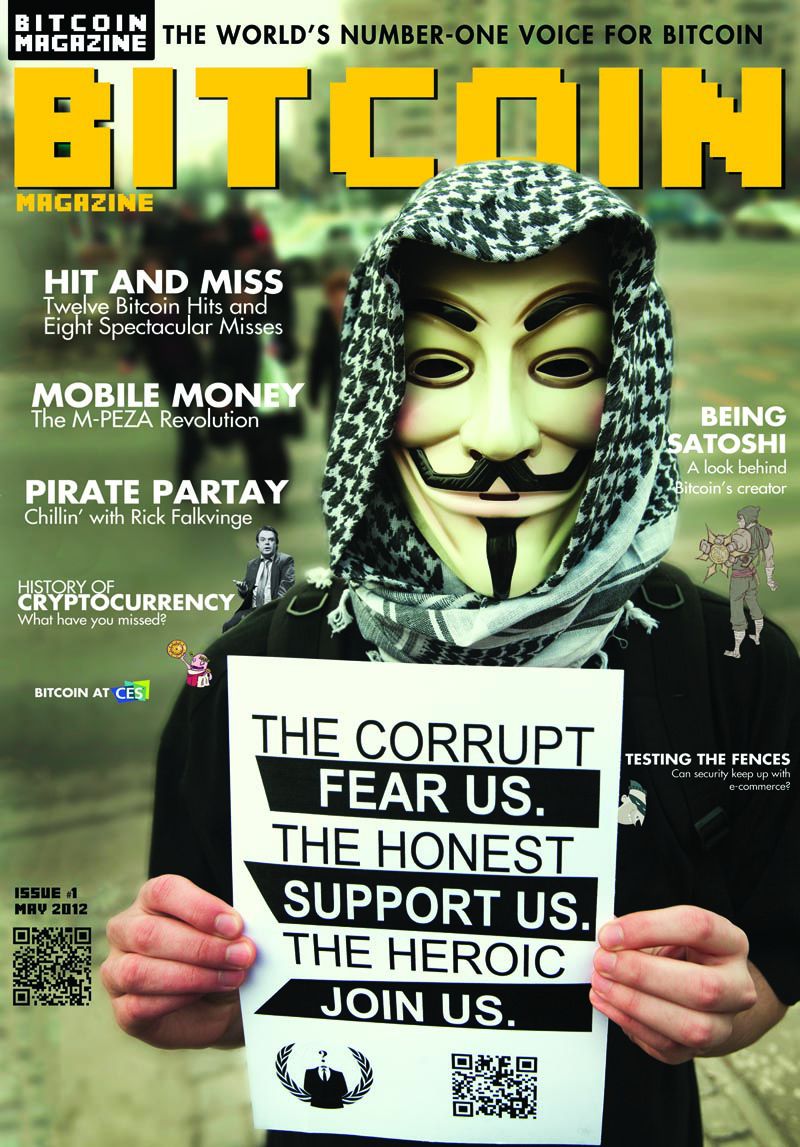
By now many people will have heard about Bitcoin. That’s the global, decentralised, online crypto-currency (check out this Wired Magazine article for some background). You can either buy it on online exchanges, or your can ‘mine’ it by running algorithms that are likely to cause your laptop to catch fire. You can then use it to buy things from vendors who’ll accept it, albeit Sainsbury’s still only accepts British Pounds. There are even mainstream currency traders who actively trade Bitcoin now.

I’ll bet all the Bitcoins I have though, that very few people actually understand what the hell Bitcoin is. I myself do not understand it. Try listen to this guy explain it, and feel your mind frazzle. More than anything, I have the sense that Bitcoin is a cult. A strange cybernetic cult. An anarchic techno-pirate, quasi-mystical collective on a dystopian mission to subvert the global monetary system. I guess that’s why it attracts me, but I’d still like to know exactly how it works.

The Blockchain
One thing I do know is that the Bitcoin network worships something called the BlockChain. I don’t really know what the blockchain is, but it exists on a huge global network of nodes. It all sounds a bit like the Matrix. My friend @Webisteme understands it, and he keeps trying to explain it to me. The other night we were at the Dogstar pub in Brixton and he said various complicated-sounding things like:

1) "It's almost like a section of the blockchain has my signature on it, and then I sign it with your name, and then the whole network agrees that we've done a transaction"
2) "The blockchain is on everyone's computer. The nodes compete to process the blockchain, to create the next piece, which then everyone has to validate again"
3) "The network is so powerful, you'd need at least 50% of the total processing power to override it, and not even the world's largest supercomputer can do that"

I'm not sure if I've quoted him correctly, but I mostly sat at the table and stared at him with a strong feeling of bewilderment. In the absence of a nuanced understanding of the currency though, I come up with my own rough analogy: "Riiight" I say, "So would you say it's a little bit like the Borg in Star Trek?"


Is Bitcoin the BORG?
THE WORLD'S FIRST PICTURE OF BITCOIN'S BLOCK CHAIN
If you’ve never seen the Star-Trek episodes with the Borg, you can check out clips on Youtube. The clips do have something of a negative spin on them, with the Borg being portrayed as an enormous sociopathic cube bent of destruction. The interesting thing about the Borg though, is that it's an entity which has no leader, its direction being rather a function of all the pieces that make it up. According to WikipediaThe Borg manifest as cybernetically-enhanced humanoid drones of multiple species, organized as an interconnected collective, the decisions of which are made by a hive-mind, linked by subspace radio frequencies.” It is perhaps most famous for the phrase “Resistance is futile”. The analogy with Bitcoin is apparent to see: Interconnected collective? Tick. Hive-mind? Tick. Linked by subspace radio frequencies? Hmm... well, I think it uses internet relay chat. Resistance is futile? Yep, the Feds can attack it, but it doesn't exist in one place so they'd have to attack all nodes at once to shut the system down. Wait a minute, Borg and Bitcoin even have two letters in common - a coincidence?

@Webisteme looks at me from the table. “Um… I guess it’s kind of like the Borg," he says, "The network is very resilient but we’re not really cybernetic drones. It’s mostly guys with big computer rigs and powerful graphics processing cards”.

The mojo of Nakamoto
What strikes me most about Bitcoin though, is how it’s managed to capture the imagination of its users. People cite various reasons why it’s powerful, including how it’s managed to overcome double-spending problems you find with other online currencies. To me though, the real source of its power comes from its mythical foundation story, involving the mysterious character of Satoshi Nakamoto.

Let me explain. Imagine a group of researchers at MIT said "Hey guys, we’ve invented a cool new crypto-currency that is decentralised and resilient. Do you want to try it?" Maybe some people would take them up on that, but it would have no mystery, no intrigue, no dark story about mafia and the CIA. Now imagine that instead of that, a mysterious dude with no traceable identity releases strange tracts onto the web, describing a new currency, and then disappears. That’s exactly what Satoshi did, and it’s the very mystery of his story that makes people want to take part in the first place. It gives the currency soul, and that’s crucial because currency that is not legally mandated needs to be imbued with soul in order to start working. That’s one reason why gold continues to be viewed as a valuable currency: It shines and you can’t really do anything with it, and for some reason humans take that to be a good indication that it has mystical quasi-religious properties worthy of being valued.

Satoshi Nakomoto basically created crypto-gold, and sent all the miners out to find it. He then departed the earth, leaving disciples such as Gavin Andresen to continue the work in his absence (check out this psychedelic video that visualises the activities of the original developers). The elite nature of that exercise is part of the appeal too. Everyone has the potential to get the crypto-gold, but only those who invest the most time and passion will actually do so. I mean, look at this fanatical maniac who will almost certainly burn his warehouse down with his Bitcoin rig. There’s something about the sheer absurdity of devoting huge amounts of computing power to something that has no physical existence which gives power and reality to the currency.

Getting my piece of the Blockchain

I've decided to buy Bitcoins. I want a file on my computer with a bunch of numbers, created by the mysterious hands of the miners, little keys to the blockchain. If only I could enter the network, jumping from computer to computer, navigating my way through the corridors of the blockchain right to the very core of the entity created by Satoshi Nakamoto himself… or herself… or themselves. I'm not sure I could do that, but I have set up an account on InterSango and have just purchased 3.986 Bitcoins at around £4.15 per coin. Now I need to work out what to do with them. Any ideas?

If you want to learn more about Bitcoin, you can go to the main site here. If you want to work on developing it yourself, check out the Sourceforge site here. If you want to see Bitcoin blocks as they’re created check out Blockexplorer, and if you want to monitor transactions as they occur see here. If you want some free Bitcoins, you can apparently get them from this kind Samaritan here. If you want to check out more general info, see WeUseCoins. Good luck, and keep me posted on how it goes.

Monday, 4 June 2012

Forget postage stamps, let's securitise the Queen


Yesterday's Jubilee caused great jubilation, or at least that's what BBC was saying. I kind of missed it, but I did think it was fitting to at least commemorate the occasion by writing a modest proposal in Bright Green Scotland, entitled Securitise the Queen.

I proposed that the British Government issue Monarch-backed securities. Here's a quote:

"Monarch-backed securities are innovative new financial instruments that will securitise the Queen, using her as collateral against which the government can borrow money... ...The technicalities of the monarch-backed sovereign debt could be ironed out fairly quickly. We put the Queen into an SPV (a special purpose vehicle, of financial crisis fame), which issues 20-year bonds to investors. The SPV is bankruptcy remote, which means that if the entity defaults, the investors can claim the Queen, but no government assets. Of course we tranche the returns: Risk-averse investors take the upper tranches, backed by the stable cash flows of the Queen’s ordinary tourist revenue. Hedge funds take the risky lower tranches, betting on the volatile residual returns from Royal event licensing rights, such as a wedding or funeral."


Indeed. The only reason I wrote this is because I'm South African, and South Africa is part of the Commonwealth, so apparently I have to have pledge alliegence to the Queen lest the British authorities revoke my visa. I suppose the proposal was slightly unorthodox, but I felt the Queen would take it in the right spirit.

I contacted the Crown office this morning for comment. The Queen was harbouring a cold, and couldn't chat on the phone, but she sent me an email saying: "One thinks that Mr Scott's proposal is very robust and laudable. One's only wish is that one's corgies get their own little SPVs".

Sure thing ma'am.


Monday, 30 April 2012

The Safe Deposit Box: Creating a Financial Wikileaks


If you were a bank employee with information about wrongdoing in your division, would you be happy to approach your senior management about it? The Whistleblower Improvement Act of 2011 would require just that, making financial whistleblowers report their concerns to company management rather than approaching government agencies directly. The act has been backed by Rep. Michael Grimm, a former FBI agent who spent a couple years undercover trying to bust dodgy stock brokerages for securities fraud. You’d think that experience would make him attuned to the problems of financial crime, but Michael Smallberg of POGO argues that “Rep. Grimm’s legislation would hobble SEC and CFTC enforcement, chill the flow of high-quality insider tips, imperil the safety and livelihood of whistleblowers, and give law-breaking companies an accountability escape hatch”.

I don't know enough about the proposed legislation to hold any definite views, but in any case GovTrack reckons that there’s only a 2% chance of the bill being passed. The greatest barriers to whistleblowing though, are social, not legal. It’s the threat of being shunned by colleagues, or passed over for promotion. Occasionally an employee just doesn't care about the social fallout, as in the case of Greg Smith’s public letter about Goldman Sachs, but more often than not they do. A life built around workplace social networks can act as a shield against speaking out against it. Potential whistleblowers doubt themselves, or don’t want to be seen as the one to spoil the party (Check out Joris Luyendijk's interview with a whistleblower). Legal support mechanisms do exist for whistleblowers, there’s little in the way of internal cultural support.


The Case for a Financial Wikileaks
That's why I reckon it's very important to have leak sites. They protect employees (to some extent) from senior management retribution, but also provide a way to bypass the social barriers to speaking out. Financial whistleblowers can currently make use of various leak sites (check out the Leak site directory), and regulatory agencies such as the FSA and the Serious Fraud Office do provide mechanisms for them. Wikileaks has previously been used for financial leaks regarding Julius Baer and Barclays, and in 2011 there was speculation that they were going to release a bombshell on Bank of America, based on emails obtained by Anonymous (In the end the emails ended up on bankofamericasuck.com and here, apparently showing dodgy dealings at a BoA subsidiary called Balboa, obtained via a leaker who claimed the bank was trying to cover it up).

Wikileaks though, has mostly made a name for itself in exposing political controversy. People don’t predominantly think of it as the place to go for corporate wrongdoing, and corporate disclosures on the site run the risk of being drowned out by the drone of government abuse. A group that does specialise in corporate disclosure is Anonymous Analytics, a wing of Anonymous specialising in "Acquiring information through unconventional means" (AKA hacking and subterfuge), and presenting it in the form of faux financial research reports. They made a stir last year for exposing potential fraud at Chaoda Modern Agriculture, a Hong Kong company that AnonAnalytics claimed was “overstating its cash balance, exaggerating its revenue, and falsifying its financial statements.” Last week they 'initiated coverage' on Huaboa International, calling it a 'pump and dump scheme with the primary objective of enriching its chairwoman'. AnonAnalystics specialises in 'primary research', but for a while it offered a dropbox facility for would-be whistleblowers. They recently shut that down, apparently because they were unable to deal with the volume of tips, comments and emails they received. Sounds like they need some more staff.

It's not just about crime
Organisations like AnonAnalytics are focused on overt cases of corporate fraud and headline grabbing controversies. Nevertheless, while having channels to expose criminality is important, there are many other equally valid reasons to create a leak site. Wikileaks release of the diplomatic cables, for example, didn't really reveal anything that controversial, but were fascinating because they offered a rare window into the internal culture of diplomatic life, the petty squabbles and power dynamics. It provided huge amounts of material for academic researchers and journalists to gain a better understanding of an otherwise opaque and closed area. There are very few such windows into the financial sector, and to date people have relied on various works of literary pop finance (e.g.Liar's Poker), and once off curiosities such as the Goldman Sachs Elevator Gossip twitter account to get mini-leaks about financial culture.

The Safe Deposit Box: A Tool for Transparency

It seems that there may be a case for a specialised financial leak site. Here's my back-of-the-envelope sketch for the Safe Deposit Box, a site focused on improving transparency in financial institutions (e.g. banks, funds) and commodity trading outfits, by providing a channel to encourage internal leaks. It could be curated by individuals with financial expertise, such that information leaked could be vetted for accuracy and presented correctly (something that non-specialist leak sites might not be able to do effectively). The site could be split into two divisions with different purposes:

  1. A whistleblowing section to allow financial employees to expose dubious behaviour, such as instances of financial crime, market manipulation, insider trading, and rogue trading.
  2. A transparency initiative focused on shedding light on the inner workings of financial institutions. This section would encourage employees to contribute information such as organisational structures, divisional strategies, risk exposures, compensation, and other info that helps to break the near impenetrable wall of secrecy large financial institutions frequently enjoy.
Many people intuitively understand the value of division 1, but division 2 is more tricky to justify. What's the point of transparency for transparency's sake? I would argue that banks and other financial institutions have huge political clout, and yet most citizens have almost no insight into their workings and strategies. For example, do most residents of Chicago have any idea of how a Morgan Stanley consortium came to be owning the city's parking metres? At a larger systemic scale too, it’s the very opacity of financial transactions that leads to increased systemic risk, which in turn impacts broader society. Providing a channel for financial employees to shed light on their organisations would thus have 1) a democratic empowerment benefit and 2) a research and regulation benefit, providing more material for citizens, academics and regulators to understand and monitor the sector.

The transparency initiative could be split into specific research domains that are of particular concern to researchers, campaigners and regulators. For example, domains could include:

  • A high-pay transparency programme to gather leaked payrolls, compensation reports and other material to help in monitoring financial incentive systems
  • A tax haven programme to gather lists of subsidiaries, offshore transactions and other material to help shed light on international tax avoidance systems
  • A loan transparency programme to gather info on loan portfolios of corporate banking divisions, thereby helping to monitor socially and environmentally irresponsible lending
  • A programme gathering info on banks' dealings with Polically Exposed Persons, authoritarian regimes, and dodgy individuals
  • A systemic risk programme gathering info on prop trading levels, interbank risk exposures, and shadow banking systems
  • A programme collecting info on poor customer service (Aka. treating clients as muppets)


I wouldn’t want to be too flippant about this. After all, in encouraging breaches to confidentiality this does border on illegality. Confidentiality though, is frequently used to block attempts to research real issues of concern. For example, in my research into the potentially damaging effects of commodity speculation, I hit a brick wall in trying to find out how much banks make in their agricultural commodity trading desks. They simply don't report it, and refuse any requests for the information. I'm of the opinion that it would be good for society to have some basic info in that regard, to assess whether this is a problem. Similarly, in my research into Glencore in the DRC, I’d love to find out the beneficial ownerships of the shell companies they do business with there. Is there any back office employee in Glencore who wants to send that to me?


SO NEAR, YET SO FAR: A TREASURE TROVE OF INFORMATION

I understand the problems of breaching confidentiality, and I know that leak sites are far from perfect. There are major issues of how such a site would be structured and who would have access to the leaked info. Would you use a (structurally and politically) centralised Wikileaks structure, or something more decentralised like OpenLeaks (set up by Wikileaks defectors, but still yet to launch). Is it better to promote something more conciliatory and collaborative, more like Wikipedia, to allow people with financial expertise to contribute knowledge? All these questions are worth asking. What I do know though, is that financial secrecy tends to benefit a pretty small swathe of society, whilst affecting a huge swathe, and I'm sure many financial workers would love an opportunity to spread the love by spreading the knowledge.

Then again, I have suspicion that such a site might attract the small problem of the financial blockade.


Tuesday, 13 March 2012

Of Toast & the Precautionary Principle: Commodity speculation revisited


Globalisation can lead to surreal situations. For example, several weeks ago I got a call from a Kenyan guy called Karim Ajania, who's based in San Francisco, and who runs a website for a Mozambican forestry project called Mezimbite. You'd think the website would be focused on, well, Mozambican forestry, but it features contributions on a variety of topics from some pre-eminent global economists, including Sir Partha Dasgupta and Oxford's Paul Collier. Karim told me that he'd managed to get respected Harvard professor and former economic advisor to Bill Clinton, Jeff Frankel, to write him a short blog on commodity speculation. Karim wanted me to write a reply.

Karim had seen a previous article I'd written on food speculation, where I'd suggested that excessive involvement of financial players in agricultural futures markets could distort prices of real food, potentially leading to negative impacts on the welfare of the world's most vulnerable people. My views ran counter to those of Jeff Frankel, who suggested that commodity speculation probably wasn't a major problem, and that most economists didn't see much reason to be concerned. Jeff's argument, like many economists, rested on the assertion that, in general, speculators make markets more efficient.

It's not so much that I disagree with all his points, but I took exception to which points he emphasised over others. He seemed to gloss over much of the ongoing academic debate. He admitted that speculation could be a problem, whilst nevertheless implying that it isn't. If Jeff were an armchair commentator I’d be happy to let his casual approach fly, but given that he’s an internationally respected academic who’s opinions are likely to hold more weight than the average person, I felt the position that speculation 'probably isn't a problem' wasn't satisfactory. So, I wrote a piece as a counterpoint to his.


If you're interested in the details, please go take a look at the article. It's quite long (around 2000 words) but contains, if nothing else, some rhetorical flourishes and useful links. If you want the summarised version though, I make an argument in three parts:
  1. On the techical side, I challenge Jeff's characterisation of the nature of speculation and how it operates. I think he's defined it too narrowly, failing to address some serious new elements of markets (including the activities of index funds and high-frequency trading).
  2. On the socio-epistemological side (is that  even a word?), I challenge the idea that there is academic 'consensus' on the issue of speculation, pointing out that a) there isn't academic consensus, b) that certain politicians try to claim that there's consensus for political reasons, and c) that even if there was consensus, that would not be reason to not be concerned for the future (indeed, I point out that there was apparent 'consensus' in the early 2000s that securitised mortgage products were a force for good).
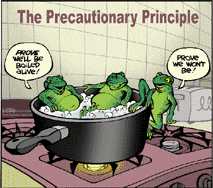
  3. On the philosophical side, I assert the fundamental necessity of applying the precautionary principle to the commodity speculation debate. In a nutshell this means that society should be cautious of activities that have the theoretical potential to negatively impact welfare, regardless of whether there is definitive 'proof' that the activity is dangerous. Many financial pundits often focus on how it is not yet 'proven' that speculation is unsafe, when really the burden of proof should be on the financial sector to prove that it is safe. Using the example of the financial crisis again, the inability to 'prove' in 2002 that securitised products were dangerous, looks in hindsight to be a pretty weak reason to have gone ahead with rampant securitisation.

I don't think Jeff would necessarily disagree with these points, and to be fair, he's a busy guy with lots of global macroeconomic issues he's more focused one. I suspect though, that if he got time to respond he'd assert the necessity for regulators to keep a close watch on the issue.

Still, the idea that the burden of proof should rest on regulators is problematic, and my point about the precautionary principle is echoed by CFTC (the US derivatives market regulator) commissioner Bart Chilton (see video below). He's got a lilting twang and hair that puts him somewhere between a cowboy and a surfer, but his message is a deeply serious one:  The potential effects of high frequency traders (the 'cheetahs') and index fund investors (the 'massive passives') needs to proactively investigated. It's not good enough for financial professionals to say 'this is too complicated for you guys to understand, just trust us'.


Bart is not the only one expressing concern. NGOs have been concerned for a long time, but mainstream commentators are increasingly taking concerns about commodity speculation to heart. Hedge funds (see comments at 10:20 in the video), CTAs (see comments at 13:07 on the video) and physical commodity traders are all suggesting financial involvement in agricultual trading could be problematic, albeit using cautious language to do so. The text-book economics answers used to theoretically reason away questions about speculation using assumptions of market rationality are being challenged.

A toast to the futures
On a slightly lighter note, Karim also asked me for a quote on the absurdity of the English toast rack for another Mezimbite article written by Thomas Thwaites. Thomas started something called the Toaster Project, drilling down into the commodity foundations of all the goods we use in everyday life, smelting his own iron ore in a microwave to make a toaster. The article generated 104 comments. Take a look at comment 19 (and the subsequent comments) - it's truly unbelievable, and has also led to me being invited to Claridges Hotel for a free breakfast, to test whether the commenter's claims are accurate.

ANCIENT WISDOM
I'll put a photo up about that once I've gone, but in all seriousness, regardless of whether you like you toast cold or hot, this issue of speculation needs to be taken seriously. Bread embodies lots of price elements. The cost of a loaf is subject to a startling array of factors, from deeply imbedded cultural reflexes of ritual and taste, to the price of natural gas (which is the raw material for ammonia-based fertilisers that farmers use on their fields), and the price of oil, from which petroleum is obtained, which is used to fuel the vehicles that transport loaves of bread from factories to cities.

And maybe, thousands of kilometers away in huge cities like New York, Chicago and London, traders, computers and pension funds entering into bets on the price of wheat, oil and natural gas via derivatives contracts, might, through their actions, be tweaking those elements that constitute the price of a piece of bread in a toaster. It's one thing taking unchecked risks on property prices (aka. the financial crisis), but it's another taking unchecked risks on the foundations of human welfare. I reckon the precautionary principle should apply especially strongly here.

Sunday, 19 February 2012

Glencore in the DRC: Building a case for shareholder activism

Over the last year I've become somewhat intrigued by Glencore and other physical commodity traders. Part of that interest comes from my work on commodity speculation, and the fact that much of the analysis around that issue has focused on investment banks and hedge funds rather than the companies that actually deal in physical commodities. Part comes from my fascination with figuring out how the global trade system works. Glencore has the added draw of being a notoriously opaque and secretive company, with a controversial and swashbuckling ex-captain who made a name for himself by doing deals that no-one else would do. Trying to figure out how their vast commodity operations work is a detective mystery if ever there was one.

In May 2011 they went public and listed on the London Stock Exchange. That means they sold ownership stakes to investors via the UK market. Technically speaking though, they only sold about 12% of the company, and technically speaking, they're not based in the UK. Rather, Glencore is based in the Canton of Zug in Switzerland, which is, to use the words of the Canton's publicity team, renowned for 'its business-friendly mentality'... which is to say... um... low taxes. For tasks other than tax accounting, Glencore has other cosy offices, like the one in London, on Berkeley Street, next door to the Sainsbury’s that I used to buy salads at back in 2010.

Stirring the copper kettle
Anyway, last week I published an article about Glencore in The Ecologist, after spending some time digging into some of their operations in the Democratic Republic of Congo. The editor put in a byline which kind of sums it up: "Moves by unknown shell companies to control lucrative natural resources may have cost Democratic Republic of Congo $1 billion in lost revenue, as UK-listed mining company Glencore under pressure to explain deals"

Sounds pretty interesting right? If you want more detail, take a look at the article, but basically it concerns two mines in Katanga Province - Mutanda and Kansuki - that Glencore co-owns and operates. Back in early 2011, their business partner in the deals - the Congolese state-owned mining company Gecamines - sold off its stakes to two shell companies listed in the British Virgin Islands, associated with a controversial diamond dealer called Dan Gertler, allegedly at a big discount. This is by no means a new story - it first emerged back in July 2011 - but it’s a story that’s been seriously underreported and one that remains unresolved. In September IMF expressed concern, and a UK MP called Eric Joyce continues to try raise awareness about these, and other deals in the DRC copper-belt (see map below).


I wanted to write about the Mutanda / Kansuki issue to help keep it in the public eye. I also noticed that most reports to date have focused on the DRC companies involved. I wanted to ask another question: How much does Glencore know about what went on?

So I did ask that, but when I phoned Glencore, it appeared they didn't think much of my query. I got to chat to Glencore's main media spokesman, a pleasant guy called Simon Buerk (who incidentally used to work as the spokesman for Shell, so I guess he’s pretty well practised with inquisitive journalists asking probing questions). Simon was actually very open and took substantial time to chat to me whilst driving on a Swiss highway. His message, as quoted in the Ecologist article, was simple: Glencore is aware of the accusations against Gecamines, but these deals involve parties external to Glencore and therefore it is irrellevant to ask their opinion on it.

It’s a line which I find difficult to accept fully. It’s true that Glencore is not legally responsible for the actions of its business associates, but can we not argue that they have a moral duty of care to their shareholders to make sure every deal they’re involved in has very robust overall governance? If nothing else, the highly non-transparent manner in which the deals took place should immediately raise concerns among the public, and shareholders, especially when it concerns the DRC, a country notorious for poor institutions. Can Glencore assure it's shareholders that they're associated with business partners that uphold robust governance standards?

Taking ownership
Then again, most of Glencore's shares are held by the company management, and a handful of institutional investors (which include Abu Dhabi based Aabar Investments, the sovereign wealth fund of Singapore, and BlackRock). Whilst the institutional investors could be encouraged to ask questions, it's difficult to get such organisations to do so. On the other hand, if I buy some Glencore shares, I become a part-owner of the company, with a theoretical right to raise my concerns with the management, who I would technically-speaking employ (see my earlier post about my experiences doing this with Centrica).

So, last Saturday I attended the FairPensions Shareholder Activism training day held at Amnesty UK's Shoreditch offices. It was attended by a whole range of people from civil society organisations, looking to use the power of owning shares to push forward progressive causes, whether it be countering tar sands in Canada, questioning arctic oil drilling, or combating tax avoidance. For my part, I took the opportunity to workshop some potential questions to ask Glencore management at their annual general meeting.

An interesting question to ask the executives would be something like this: "Recently UK MP Eric Joyce and the IMF raised serious concerns about the sale of stakes in mines you co-own in the DRC. Joyce, and others, claim that your initial partner in the mines secretly sold their stakes to shell companies associated with a person closely connected to the DRC president Joseph Kabila, and did so at hugely discounted prices. This raises the issue of what due dilligence processes you have in place when entering into joint ventures with partners in countries known for high levels of political risk. My questions to you are 1) Are you aware of these allegations related to your business associates, and 2) What procedures do you have in place to assure shareholders that the company will not be exposed to potential future damages arising from reputational risk and politically-imposed penalties and fines?"

I'd probably need to get the question more precise and I suspect the answer would be pretty generic, but that’s not the point. Glencore undoubtedly has a strong response, but the fact of the matter is that nobody has yet challenged them, and if there is one thing that I believe as a general principle, it’s that it’s always preferable to challenge power than to not challenge it.

Hey guys, can I call you StrataCore?
That's going to be all the more important now that Glencore has announced a probable merger with XStrata, which would create a commodity behemoth unlike any we've seen before (The press are calling them Glencore Xstrata, but I bet they'll call themselves StrataCore). Glencore specialises in commodity trading, and XStrata specialises in physical mining, and whatever the combined entity gets called, both companies think that there is great potential for 'synergies'. In particular, there will be increased potential for ‘geographical arbitrage’, which is a fancy way of saying the company will have superlative ability to source low price commodities whilst selling them in places where the prices are much higher. It plays into the hands of Glencore's core business model, which revolves around its ability to make money off global commodity market inefficiency (Indeed, the original way Glencore founder Marc Rich did this was by doing deals in places where commodity prices were depressed by political isolation or turmoil, a skill that requires aggression and significant exposure to gatekeepers who are politically exposed).

If nothing else, Glencore and XStrata will have synergies in the Canton of Zug, where both companies are 'based'. The combined entity will be able to share a mailbox, and a tab at the local pub.

Tuesday, 31 January 2012

A new campaign is born! Banking on something better with MoveYourMoney UK


I tried to spend Christmas day at the London Occupy camps, but truth be told, I couldn't stay there long and ended up wondering the City instead. Maybe I was just melancholic at spending another solitary Christmas, but I couldn’t help feeling that the original dynamism of Occupy was lost. I sat on the stairs of St. Paul’s and looked at a tent calling for everyone to become a vegan. There’s something slightly futile about that message. There's also something highly prescriptive about it, allowing little space for those who might sympathise in principle with the broad critique of finance, but who don't feel included in the ragtag countercultural facade. The Occupy movement is showing real signs of losing steam, and part of it is simply down to the fact that, when push comes to shove, it doesn't really offer that much to the everyday person.

That’s why I’m so pleased MoveYourMoneyUK arrived on the scene today. The campaign asks people to withdraw their money from the huge 'big 5' UK banks (Barclays, HSBC, Lloyds, RBS & Santander), and to deposit some or all of it into co-operatives, mutuals, credit unions and ethical banks. Coming on the heels of the more abstract Occupy-related campaigns, MYM seems to offer a wider range of people the chance to do something highly concrete, and which can make them feel included in an exciting process of incremental positive change.

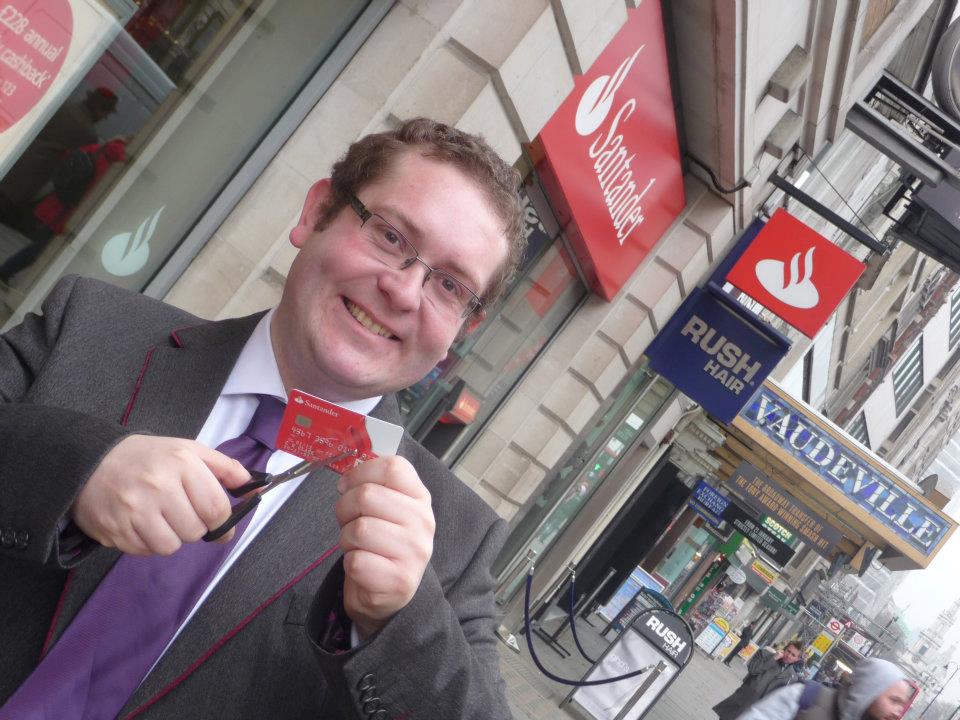
CHRIS CLARK lays the smackdown on his Santander Card
While Occupy has offered some people a chance to take part in working groups on alternative economics, those always end up being  long on theory and short on practice, effective at making people stop and think for a moment, but not effective in holding them to any action. Indeed, most people are not pissed of with banks because of something imprecise like ‘neoliberalism’. People are pissed off because of specific issues like bonuses, tax avoidance, unethical investments and speculation, all of which are a step away from the ideological arguments about grand economic structure. A simple action like moving money is a practical step that is available to almost anyone to take part in, because even if people don't agree on all the epic ideological questions (like whether we should have a steady state economy etc.), the banking oligopoly has managed to do specific things that annoy the shit out of most people in some way or other.

I was involved in writing some contributions for the website (including a piece on commodity speculation). The overall narrative regarding the problems with banks has been designed to be as simple and intuitive as possible, and I've sketched it out in the diagram on the left. It goes roughly as follows: We deposit money into banks. Those banks claim that they’re committed to supporting small business and productive enterprise, yet most of their lending seems to go into socially useless activities and speculation. They’re notoriously lax in their ethical policies, investing in shite projects and dubious regimes. Through all of this they’re supported by government subsidy that enhances their profits, and they then take the piss with the huge bonuses, which only serves to distort behaviour and increase systemic risk. To top it all, there are the not-so-small issues of tax avoidance and mis-selling scandals.

The campaign lays this out and then lays out the alternative options for people: Put your money into mutuals and ethical banks that will steer clear of risky speculation, and that focus on supporting SMEs and prudent, socially useful lending. The campaign doesn't claim that alternative banks are perfect, but points out, that unlike the major incumbents, they at least make a lot more effort to be sustainable.

What I like most about this campaign is that it is not just a defensive reaction against the current banking system, but also a chance for people to proactively support and build the alternative. You might not have the time or inclination to be actively involved in policy discussions around financial reform, but you can help animate change by steering your money towards those challengers that are forging a new path against the stagnant and complacent banking status quo. It’s as much a creative vote of confidence in the ability to build something new as it is a protest against the old, and I’m fascinated to see how it might affect the alternative banking institutions.

Anyway, that's enough theorising. Please get involved and pledge to move some or all of your money in March 2012! I've already pledged, not that I have much money to move, and since doing that the high street suddenly looks full of exciting opportunities. Should I move to a big alternative like the Co-op Bank, or maybe a building society like Nationwide, or something much smaller like the London Mutual Credit Union? Watch this space for more on that, and in the mean time, check out the cool new MYM UK video...


Tuesday, 20 December 2011

Protectors of Treasure Island: Border Dragons of the Offshore Financial System


Several hundred years back, the City of London was protected by a great stone wall, and access was controlled via several key gates. Aldersgate was in the north, Ludgate was to the west, Aldgate was in the east, and on the south end of London Bridge there was Bridge Gate. Later, others were added, like Bishopsgate, Moorgate, Cripplegate, and Newgate. Nowadays, the physical wall and gates have slipped out of popular memory. To many modern commuters into the City, the Moorgate is nothing but a station on the Northern Line of the London Underground.

Recently, a wing of the Occupy movement set up camp just up the road from Moorgate, in Finsbury Square. Another wing set up in an old building in Sun Street. Like the original St. Paul’s Camp, the new camps seem  like incongruous outposts amidst the black sheet glass and metal frames of buildings housing financial giants. The protesters have managed to take temporary control of small areas of physical space, and yet, do they really have true access to the City?

It seems to me that the walls of the City are still there, only nowadays you can’t see them. They exist in codes and institutions, cultures and hidden political forces, architectural styles and subtle symbols whispering you don't belong here. Finding ways of passing these hidden gates is a great and worthwhile challenge. Before that can be done though, it's good to get a sense of the ancient boundaries of the City. That's why I've been recently visiting the border dragons.

TAKE ME TO YOUR LEADER
The City border dragons are sentinels on plinths, totem-like creatures lurking at the ancient entrances to the City, originally to warn travelers and act as toll-booths. They’re sometimes called griffins, but they’re actually dragons, dog-like dragons with wings and a forked tongue. Maybe they’re like small versions of Cerberus, Hade’s three-headed hound of darkness that guards the underworld across the river Styx. Indeed, you do find three of them as you cross over the river Thames – two on the south side of London Bridge, and one in the middle of the road on the south side of Blackfriars Bridge.

So where are the others found? The largest border dragon is found at the Temple Bar on Fleet Street, perched by the Royal Courts of Justice like a nazgul from the Lord of the Rings. There are two smaller ones keeping watch in the street next to Chancery Lane tube station on High Holborn. See if you can find the others. There’s one lurking somewhere on Goswell Road in the north, and one next to the Broadgate complex. There's one around Moorgate, and another guarding the area before the Tower of London, somewhere on Byward street.

My favourite border dragons though, are on the Victoria Embankment by Temple Place. They’re slightly larger than most of the dragons, and strangely enough, they used to reside above the entrance to the London Coal Exchange which was demolished in 1963. Word on the street is that they took off and flew into the night, landing on Victoria Embankment two years later.

Some have suggested that the dragons are creatures from mystical treasure islands known as offshore tax havens. Indeed, the City is at the centre of a giant web of such havens, a beating financial heart drawing in money from the opaque offshore jurisdictions and pumping it back out to them again, keeping a global system of secrecy alive. The vast majority of hedge funds and SPVs for example, are incorporated in places like the Cayman Islands, even though they’re managed from offices within London and the US. It poses something of a headache for tax authorities, and also places something of a burden on the broader society which does not have access to the offshore realms. Indeed, it's an open question as to how much of the City of London is even in London, and how much is situated within excel spreadsheets on computers in Bermuda and the British Virgin Islands.

I COME IN PEACE
Certainly the City incorporates a lot more physical space than meets the eye. It’s like that scene in The Lion, the Witch, and the Wardrobe where the door to Narnia is found. Hidden doors abound in the City, and they lead to parallel universes on Caribbean Shores and Swiss Cantons

So where does this leave access? I'm not sure. The border dragons mark the ostensible borders of the City, but the true borders are scattered and fragmented by a world of shell companies and registered addresses. And we haven't even got into the cultural and political boundaries yet. I guess we’ll have to work on this access issue a bit more in due course. I’ve had controversial views on it before, and they need to be refined.

In the mean time, take some photos of dragons. Put a funny hat on its head, or give it some bling accessories. Please do send the photos on me. I’ll be sure to put them up.